
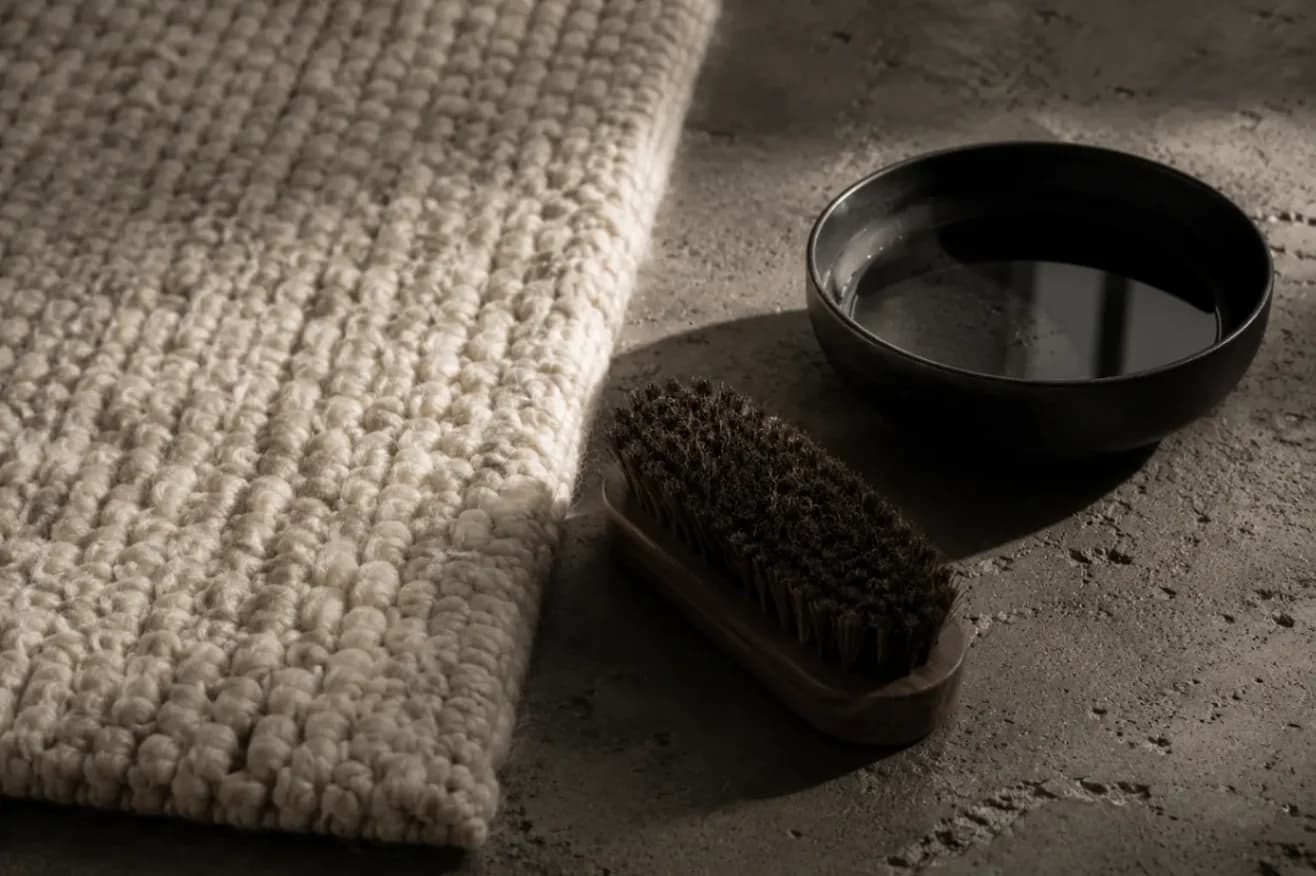
A handmade rug is one of the most durable investments you can make for your home. A well-maintained hand-knotted rug can last 50 to 100 years. But "well-maintained" is the operative phrase.
The good news is that caring for a handmade rug is not complicated. It requires consistency, a few basic techniques, and the discipline to avoid the handful of things that can cause irreversible damage.
Part 1: Routine Maintenance
Vacuuming: The Single Most Important Habit
If you do nothing else from this guide, do this: vacuum your rug once a week.
Regular vacuuming removes the grit, dust, and fine particles that settle deep into the pile. These particles act like sandpaper — every time someone walks across the rug, the grit grinds against the fibres, gradually weakening them.
How to vacuum correctly: • Use suction only. Turn off the beater bar or rotating brush — these are designed for synthetic carpets, not handmade rugs. • Vacuum in the direction of the pile. • Avoid the fringe — the suction can pull threads loose. • Flip and vacuum the back once a month.
The Shedding Phase
New rugs will shed — this is not a defect. Loose fibre ends from the finishing process work their way out during the first 3-6 months. Vacuum more frequently (2-3 times/week) and never use a rotating brush.
Rotation
Rotate your rug 180 degrees every 3-6 months for even wear distribution and uniform sun exposure.
Rug Pads
Always use a rug pad. It prevents slipping, absorbs impact, improves airflow (critical in humid Indian climates), and extends lifespan by 10-20 years. Choose natural rubber or felt pads. Avoid synthetic PVC.
Part 2: Stain Removal and Emergency Care
The Universal Rule: Blot, Never Rub
Rubbing spreads the liquid and drives it deeper into the pile. Press a clean, white cloth firmly onto the spill. Hold for 10-15 seconds. Lift. Repeat.
Specific Stain Protocols
Water-Based Spills (tea, coffee, juice): Blot immediately. Dampen a fresh cloth with cold water (never hot). Blot from outside in. Stack dry towels over the area, weight them down, leave for 6-8 hours.
Milk or Dairy Spills: Blot immediately — dairy sours quickly in Indian summers. Mix one tablespoon of white vinegar with one cup of cold water. Dab and blot. Follow with cold-water blot. Dry thoroughly.
Oil and Grease (cooking oil, ghee): Sprinkle baking soda or cornstarch over the stain. Let sit for 30 minutes. Vacuum. If a mark remains, use diluted dish soap on a damp cloth.
Red Wine: Blot. Sprinkle salt generously — the salt draws out the wine. Leave for 15-20 minutes. Vacuum. If staining persists, call a professional. Do NOT use hydrogen peroxide or bleach.
Pet Accidents (urine): Blot. Mix one part white vinegar with two parts cold water. Blot. Sprinkle baking soda. Once dry, vacuum. Professional enzymatic cleaning may be needed for odour.
What Never to Use on a Handmade Rug
- Bleach — permanently strips colour
- Hydrogen peroxide — bleaches natural fibres
- Ammonia-based cleaners — damages wool protein
- Commercial carpet sprays — formulated for synthetic carpets
- Steam cleaners — heat and moisture shrink wool, melt silk
Part 3: Professional Deep Cleaning
Your rug should be professionally deep-cleaned every 3-5 years.
Professional Submersion Washing
The gold standard: the facility dusts the rug, tests dye colourfastness, submerges it in a temperature-controlled bath with pH-neutral detergent, gently agitates it, rinses thoroughly, and flat-dries in a controlled environment.
Never dry clean (solvents strip lanolin), never steam clean, and never use a rented household carpet cleaning machine (leaves excess moisture that causes mildew).
Part 4: Seasonal Care for Indian Homes
Monsoon Season (June-September)
Humidity is the enemy. Run dehumidifiers. Lift rugs weekly to check for moisture. If the rug gets wet from a leak, dry it immediately with fans. Do not leave a wet rug on the floor — it will develop mildew within 24-48 hours.
Summer (March-June)
UV exposure fades natural dyes. Use UV-filtering window film. Rotate every 2-3 months. If you're away for summer holiday, roll the rug (do not fold) and store in a cool, dry place.
Winter (November-February)
The kindest season for rugs. Low humidity makes this the ideal time for professional cleaning.
Part 5: Storage
- 01Clean it first — dirty rugs attract moths
- 02Roll it — never fold (folding creates permanent crease lines)
- 03Wrap in breathable fabric — cotton sheet or acid-free paper. Never plastic.
- 04Store horizontally on a raised surface
- 05Check every 2-3 months — unroll, inspect for moth damage, air out
Moth Prevention
Place cedar blocks or lavender sachets inside the rolled rug. Avoid dark, undisturbed storage areas. Regularly vacuum and air out rugs in active use.
A Final Word on Care
The artisan who wove your rug spent months — sometimes years — on each piece. A weekly vacuum, a seasonal rotation, and the discipline to blot instead of rub when life happens. Do that, and your rug will age developing the soft, luminous patina that makes a 20-year-old hand-knotted rug more beautiful than the day it was finished.